Lina Kononenko Back to main

Wix, DeviantArt mobile teamHead of Design2020–202212 min read

Redesigning DeviantArt’s mobile apps, and turning it to a growth engine

DeviantArt is the world’s largest social network for artists and art enthusiasts. I initiated its return to native mobile, secured executive buy-in, and co-founded a dedicated mobile product stream. I built the mobile design team and led the full redesign of both apps. The redesign sat at the core of the mobile transformation strategy, and it delivered 120% engagement growth, four times the original target. This success led to my transition to Head of Mobile, where I took ownership of the entire mobile organisation, redefined its product strategy, and drove another 60% growth in engagement.

Role
Head of Design,then Head of Mobile
Team
1 design team, 5 people,then 7 teams, 30 people
Timeline
Feb 2020to Sep 2022
Scope
iOS and Android,80M+ users
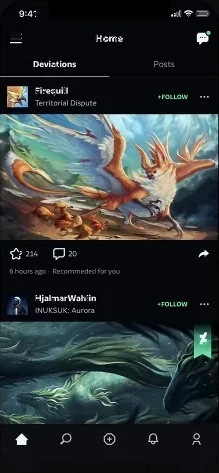
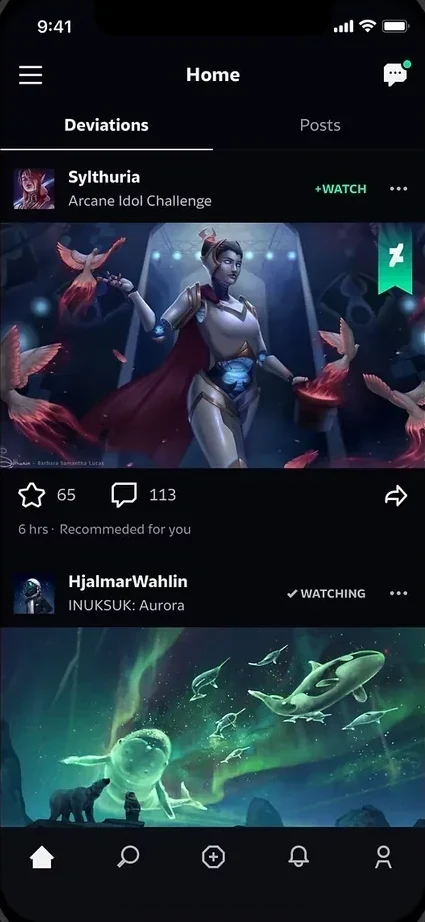
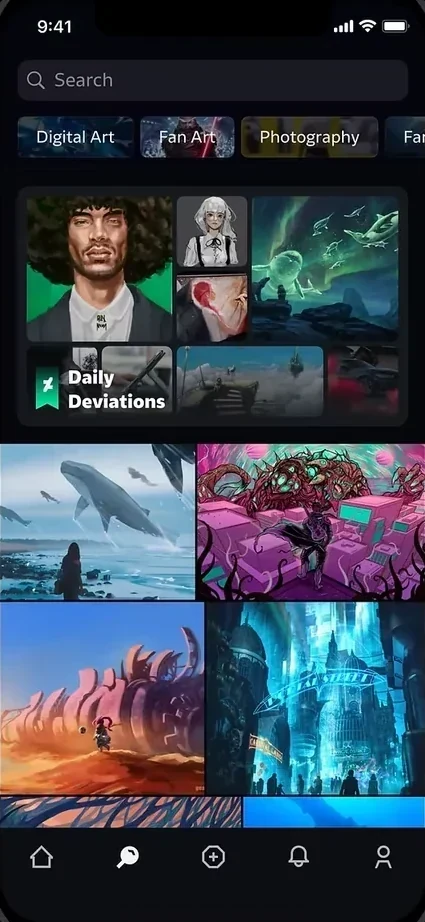
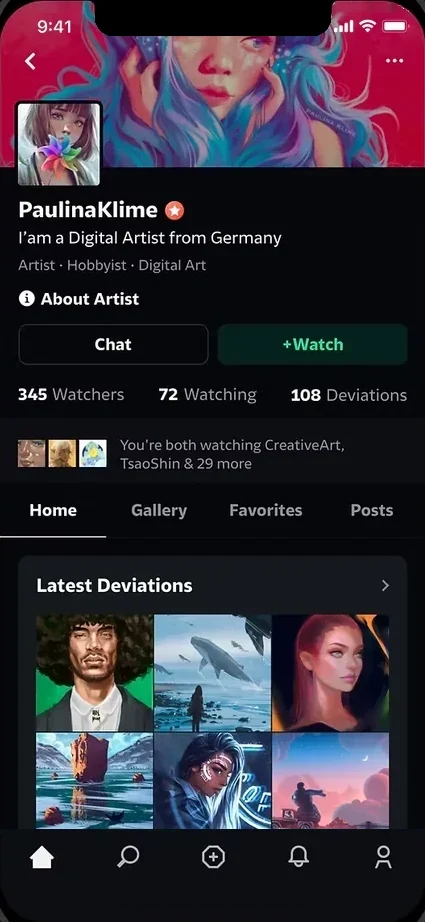
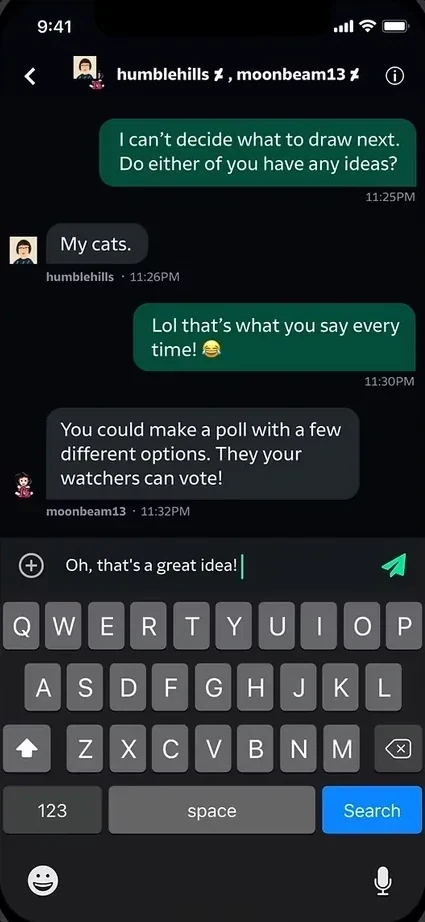
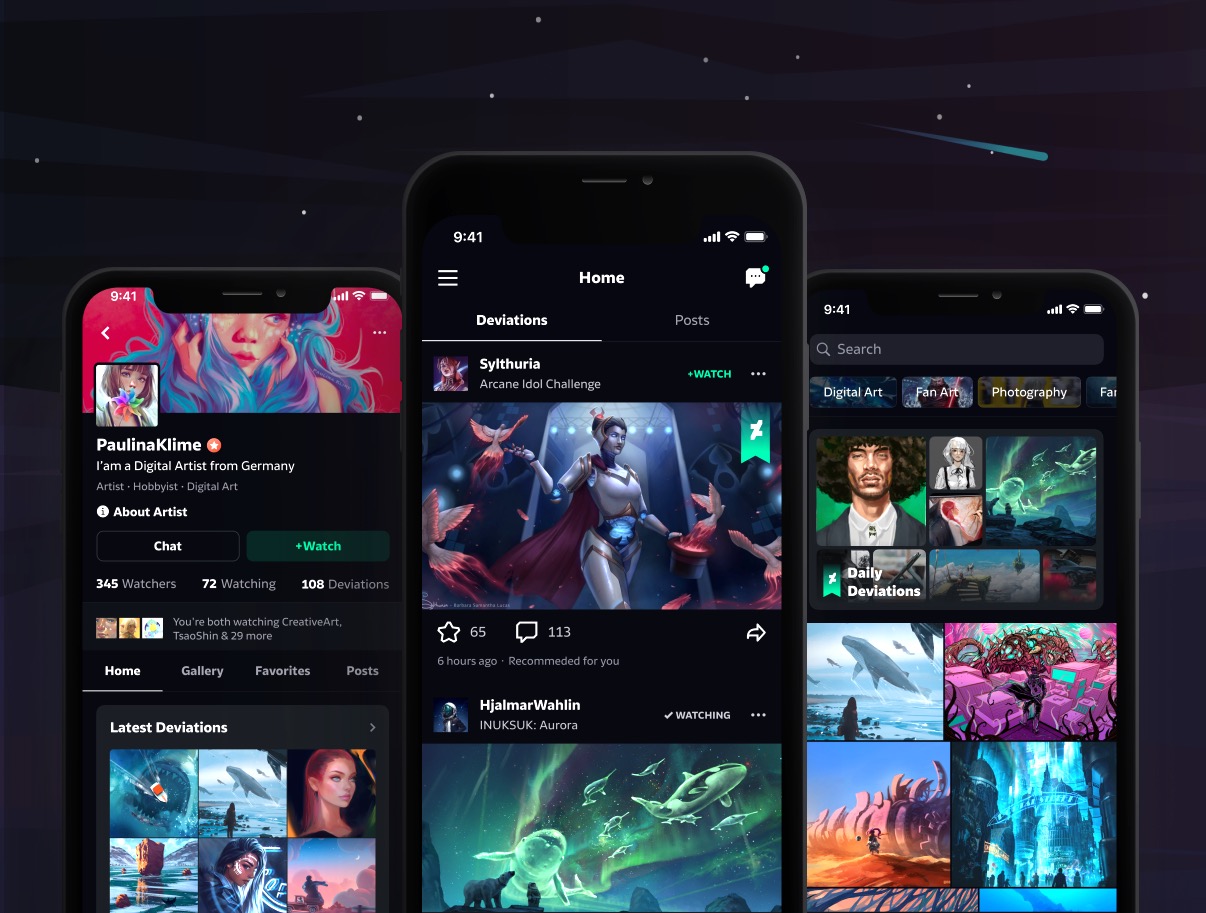
The redesigned DeviantArt app on three phones: an artist profile, the home feed, and discovery

Impact summary:

Mobile became DeviantArt’s growth engine. And its best-converting channel.

  • Engagement

    +120% Engagement volume

    Four times the +30% target set for the redesign, on the goal ranked first.

  • Daily use

    +75% Daily active users

    Mobile adoption took off: the apps became members’ everyday way into DeviantArt.

  • Creators

    +45% Artwork submissions

    Submissions are DeviantArt’s core engine and a multiplier for every key product metric.

  • Acquisition

    64% First-time DeviantArt users

    Mobile became a growth engine, bringing new users to the platform.

  • Activation

    3× New to engaged, vs desktop

    Newcomers became active members 3× as often as on desktop.

  • Retention

    +20% Weekly retained users

    The growth held: the strategy built lasting habits, not a launch spike.
My role

I led the effort in two roles: first led product design, then the whole mobile org.

I initiated DeviantArt’s mobile revival and co-founded a dedicated product stream, taking it from an uncertain investment to a strategic growth opportunity. Over two years, my role evolved from building and leading the mobile design team to owning the product strategy, performance, and delivery of the entire mobile organisation.

Role 01

Feb 2020 to May 2021

Head of Design

1team, built from zero

I initiated DeviantArt’s return to native mobile and partnered with product, engineering and executive leaders to drive it: from the investment case, through a phased redesign that put design at the core of the new strategy, to a design team built to shape product direction, not only deliver a redesign.

  • Won the investmentInitiated the return to native mobile, partnered with the Head of Product to shape the investment case and pilot strategy, and secured executive buy-in for a dedicated mobile product stream.
  • Defined the redesign strategyDeveloped a phased redesign strategy that delivered measurable results at each stage and secured continued investment and team expansion.
  • Made design a driver of growthPositioned design as the core driver of the new mobile strategy, proving that exceptional user experience could deliver substantial business growth.
  • Built and led the teamBuilt and led the mobile design team from within the company, establishing a culture of ownership, creative ambition, collaboration, and a shared commitment to exceptional craft.

Role 02

May 2021 to Sep 2022

Head of Mobile

7teams across 6 countries

Transitioned to run all of mobile R&D: product, design, engineering, QA, data analytics and product marketing. Transformed the product strategy and lifted every core KPI on a platform of 80M+ users.

  • Transformed product strategyTook the roadmap from engagement to growth across the whole lifecycle: acquisition, activation, retention, creators and the first steps to monetisation.
  • Led all of mobile R&DTurned product, design, engineering, QA, data analytics and product marketing into one organisation, owning the same goals and the same outcomes.
  • Revamped product deliveryRebuilt how mobile ships: more engineering capacity, a cleared iOS backlog, and shorter cycles with developers brought into discovery.
  • Built a data-driven operationStrengthened product analytics, automated reporting, and app-health monitoring to inform strategic decisions, prioritisation, and performance tracking.
01 / 02

Problem space

The challenge wasn’t fixing or redesigning two apps. It was proving they were worth reinvesting in.

DeviantArt was the world’s largest online community for artists, with over 80 million registered members. Following its acquisition by Wix in 2017, the company focused on rebuilding the web platform, leaving mobile behind. I joined in early 2018 to lead design for that transformation.

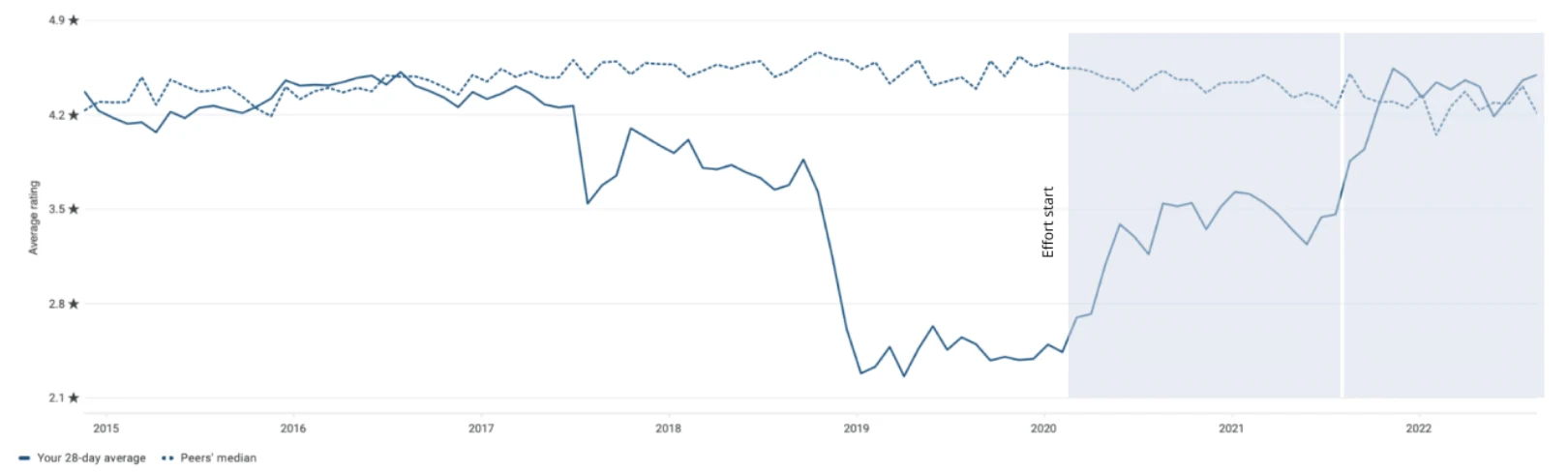
By 2020, neither mobile app had received a meaningful update in four years. Both barely worked, ran on ageing technology, and held store ratings of just 1.9 on the App Store and 2.3 on Google Play. For a social network built around artists discovering, sharing, and connecting, mobile wasn’t just another platform. It was a critical part of the community experience and an untapped opportunity to drive engagement, retention, and future growth.

Before the redesign

The apps as I found them. Built in 2014, last updated in 2016, and barely functioning across every part of the experience.

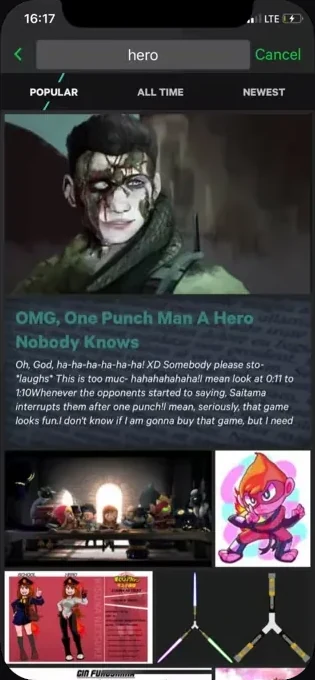
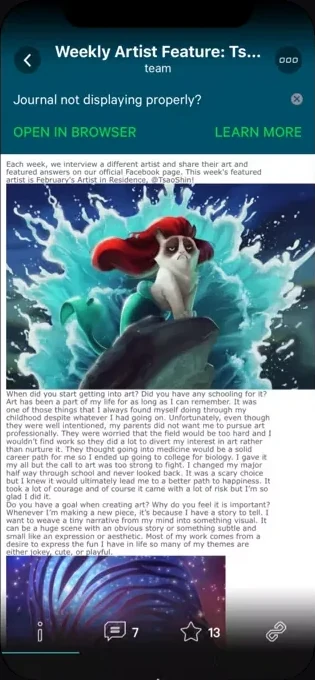
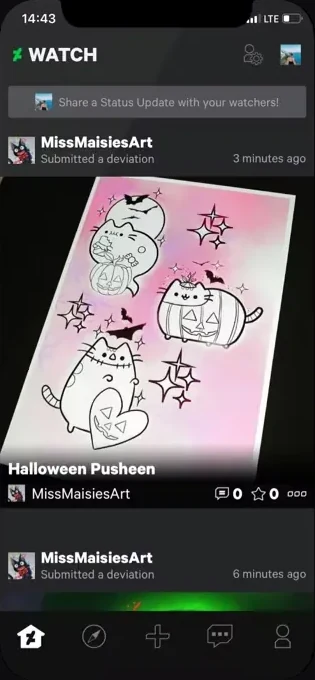
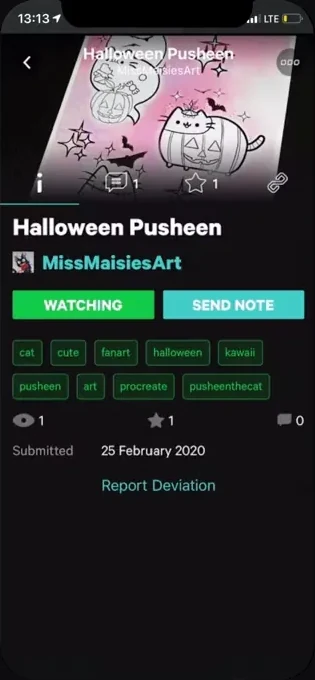
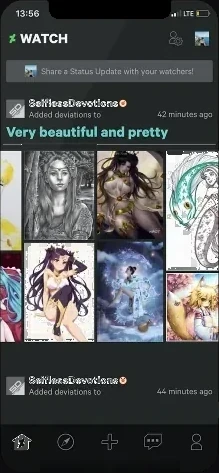
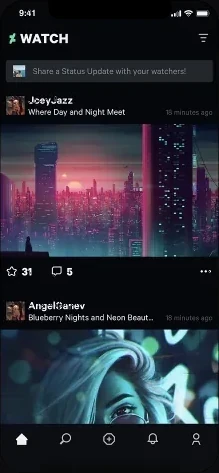
The old app: Discover, with recommended artDiscoverThe old app: search resultsSearchThe old app: a journal, falling back to a web viewJournalThe old app: the watch feedWatch feedThe old app: an artwork pageArtwork page
4years without updatesBroken functionality1.9App Store2.3Google PlayLimiting experience

I started the push for mobile myself: I pitched the opportunity to the executive team, partnered with the Head of Product to build the case for reinvestment, and rallied leadership behind it. With limited team capacity, no dedicated mobile team, two native platforms, and an ongoing company-wide product transformation, securing executive commitment was far from straightforward, though.

The exec team’s question was simple: Could you prove mobile would deliver enough business value to justify the investment? My answer: the bet I made

Strategic bet

Prove traction first. Earn the investment to go further.

Rather than asking for a full redesign and a dedicated team upfront, I proposed a staged approach: get the apps back into users’ hands, measure whether people would return, and use that evidence to justify a much bigger commitment.

Key decision 1

Make traction the condition for investment.

Prove the opportunity in stages, discovery and engagement first and acquisition next, against a +30% engagement target, before committing to a complete redesign. We shipped in three steps, each one earning the next: a small test to prove people would come back, a bridge release to make the apps work again, then the redesign, area by area.

  1. The initial test build of the iOS app

    Feb 2020

    Initial test
  2. The bridge version of the app

    Apr 2020

    Bridge version
  3. The first redesigned home feed

    From mid 2020

    Staged redesign

The redesign followed the same rule, block by block: engagement first, starting with the home feed and discovery; then retention, with chat, groups and profiles; then growth. Every release put real changes in users’ hands, brought back feedback and evidence, and earned the next.

Traded
The splash of one big relaunch, and the faster route to a complete new app
Gained
Lower risk, real user feedback, and investment earned as we progressed
Result
The pilot’s numbers won the green light for the full programme and a dedicated team

Key decision 2

Use the help already around us to get moving.

With no mobile team of our own, I got the first releases out with the people and resources already available, and used the results to earn investment in a bigger team. That meant leaning on three circles of collaboration: DeviantArt’s cross-functional web teams and AI team for joint product work, Wix’s mobile UX teams and UX Guild for advice and best practices, and consultants for accessibility and other specialist work.

Traded
Time spent aligning teams that were not ours
Gained
Capacity and expertise we could not have hired in time
Result
The first releases shipped without a mobile team, and earned the backing for one

Key decision 3

Design it myself first, and let the work build the team.

Rather than hiring designers from scratch, I designed the bridge version and drafted the first redesign concepts myself. The work did the recruiting: DeviantArt designers got enthusiastic about it and joined me part time, then moved over full time to deliver the complete redesign.

Traded
Months of overtime: with no team capacity, I carried the hands-on design myself
Gained
A committed team that chose the work and already knew the product inside out
Result
A five-person design team, built from inside the company, that went on to deliver the complete redesign

Design and impact

The complete redesign of DeviantArt mobile

Once the pilot proved the opportunity, I built the mobile design team and defined how we worked. The goal was never just new screens. I set out to create one coherent experience across iOS and Android, aligned with the redesigned web and built around three core behaviours: discovering art, engaging with it, and contributing work back. We delivered it area by area, learning in production while keeping old and new journeys seamless for millions of members.

Design process

Every area of the redesign moved through the same six stages, from the first question to life after launch. Some steps ran on every project; others only when the work called for them.

  1. 01Discovery

    • Problem definition
    • Data analysis
    • User research
    • Competitor analysis
    • Design, PM and dev together
    • Constraints analysis
  2. 02Definition

    • Experience mapping
    • Collaboration with PM
    • Lo-fi definition
    • Plan and requirements
    • Alignment with teams
    • Goals and KPIs
  3. 03Specification

    • Hi-fi definition
    • UX specification
    • Full flow
    • Content by UX writer
    • Alignment with dev
  4. 04Visual design

    • Inspiration and concepts
    • Visual design, Android
    • Visual design, iOS
    • Illustrator review
    • Animations
    • Design system
  5. 05Wrap-up

    • Dev hand-off
    • Dev support
    • UX QA
    • Release preparation
  6. 06Post-launch

    • Data monitoring
    • Connecting with users
    • Support tickets
    • App reviews
    • Refinement

Every projectWhen needed

01 Impact area · Engagement

Make art easier to find and react to

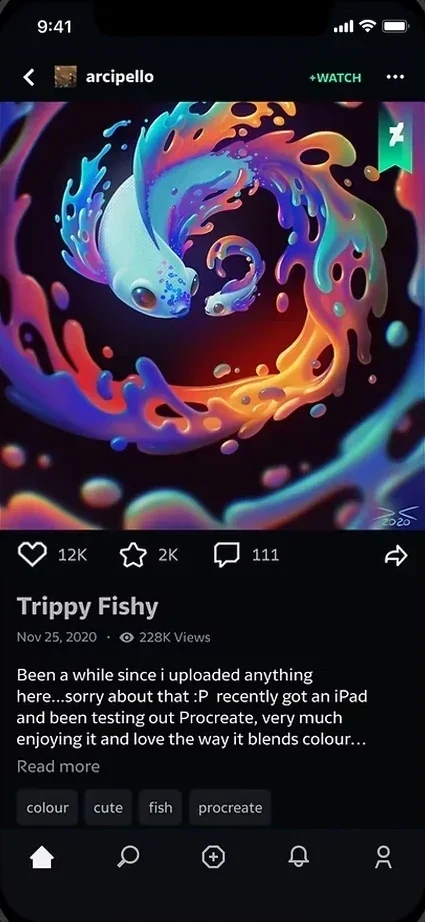
We started where people spend most of their time: a new home feed mixing followed and recommended art, discovery rebuilt for browsing on a phone, and quick, mobile-first ways to react, from a double-tap like to saving straight into a collection.

+120%
Engagement volume
+75%
Daily active users
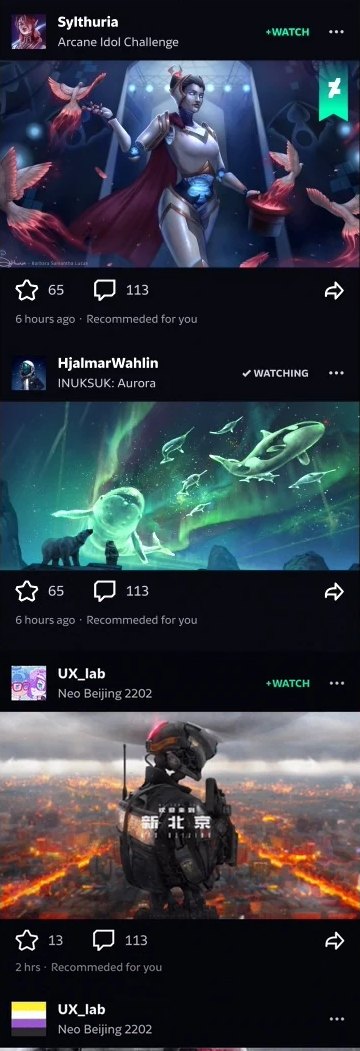
  • Home feed: An AI-powered feed that mixes recommended and followed art, replacing the old Watch list

    Home feed

    Replaced the Watch list with a feed that mixes in AI recommendations, so every visit surfaces new art and artists.

  • Favourite and collect: Favourite in one tap, or save straight into a collection without leaving the feed

    Favourite and collect

    Favourite in one tap or save to a collection without leaving the feed. Curating became part of browsing.

  • Double-tap to like: The gesture people already know, now on every piece of art

    Double-tap to like

    Added a new type of engagement beyond collecting: a like, one double-tap away, which drove a clear spike.

  • More like this: Slide right for more like it, left to hide it: recommendations tuned on the go

    More like this

    Slide right for more, left to hide, and the AI adapts instantly. People shape their feed in the moment.

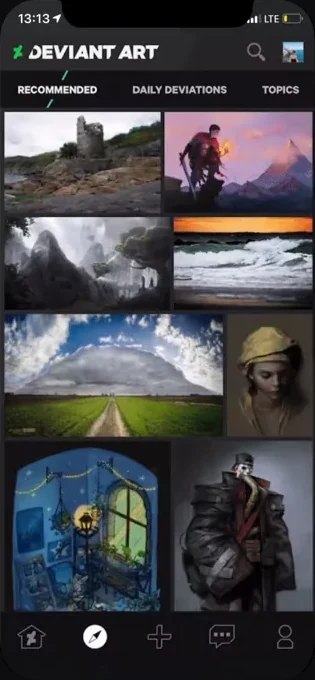
  • Discovery: Discover, advanced search and topics, rebuilt for browsing on a phone

    Discovery

    Discover, search and topics rebuilt for a phone, so finding new art fits short, one-handed sessions.

  • Art page: The artwork first, with every action one tap away

    Art page

    The artwork fills the screen with every action one tap away, so looking turns into reacting and commenting.

02 Impact area · Submissions

Turn viewers into artists who post

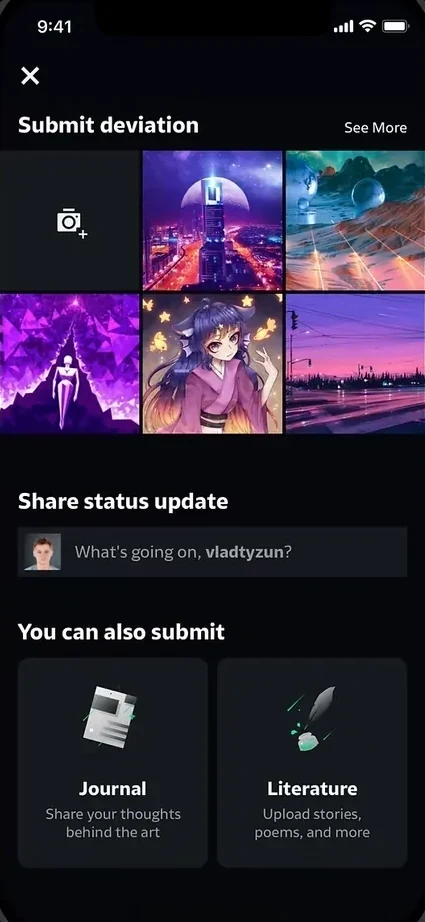
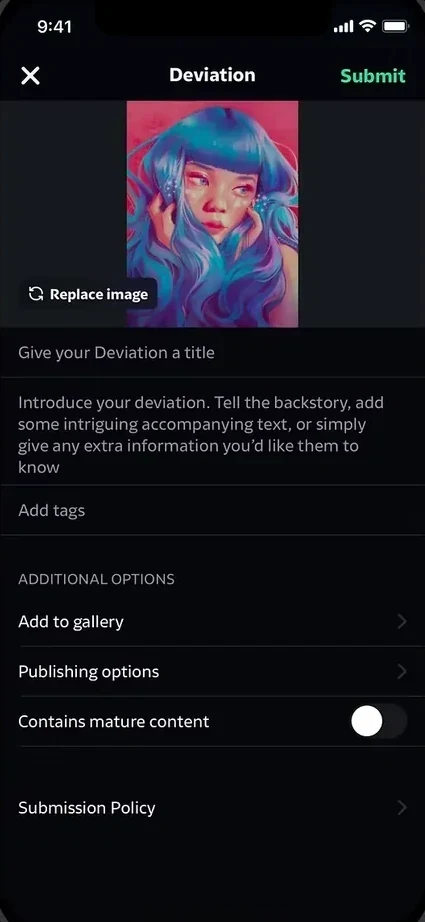
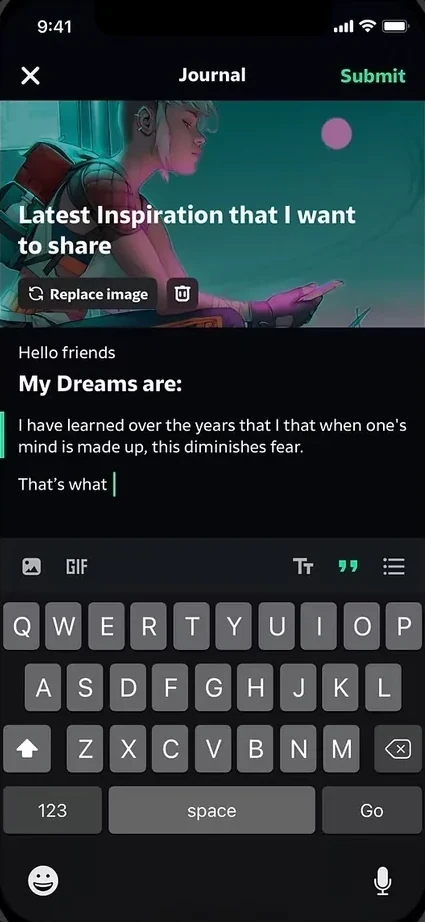
Creator participation mattered to the health of the whole platform, and I didn’t want mobile to become a polished place only to browse. I brought submissions into product strategy: one submit hub for every content type, with artwork and journal flows built for the phone.

+45%
Submissions on mobile
+37%
Submitters on mobile
  • Submit hub: One place to post anything: art, journals, status updates and literature

    Submit hub

    One place to post art, journals, status updates and literature, so creators can share anything from their phone.

  • Artwork: Upload, describe, tag and publish in a single flow

    Artwork

    Upload, describe, tag and publish in one flow. Fewer steps to share lowers the barrier for first-time posters.

  • Journal: Long-form writing with images, built for a phone keyboard

    Journal

    Journals once fell back to a web view. Now they’re native and built for a phone keyboard, so writers post anywhere.

03 Impact area · Retention

Give people reasons to come back

We brought the community itself into the app: groups to join for the first time, chat built from scratch including group chats, and a content-first profile with galleries and collections artists curate themselves.

+20%
Weekly retention
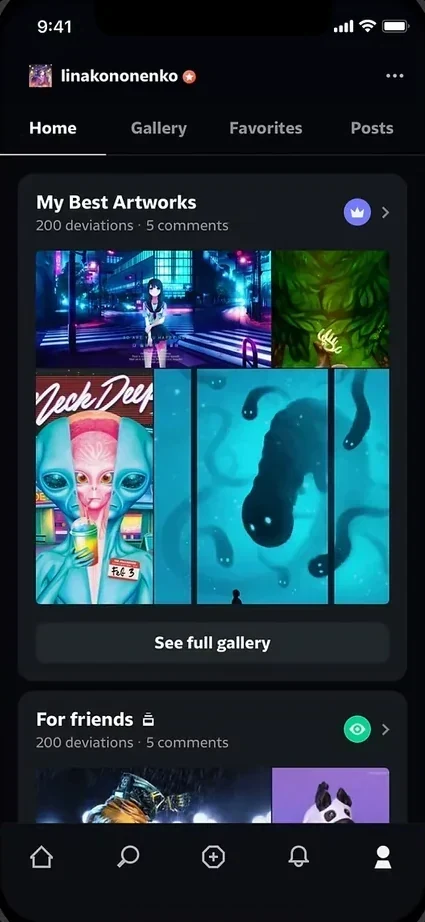
  • Profile: Rebuilt around the artist and their work, in line with the web

    Profile

    Rebuilt around the artist’s work, in line with the web. A portfolio that gives visitors a reason to follow.

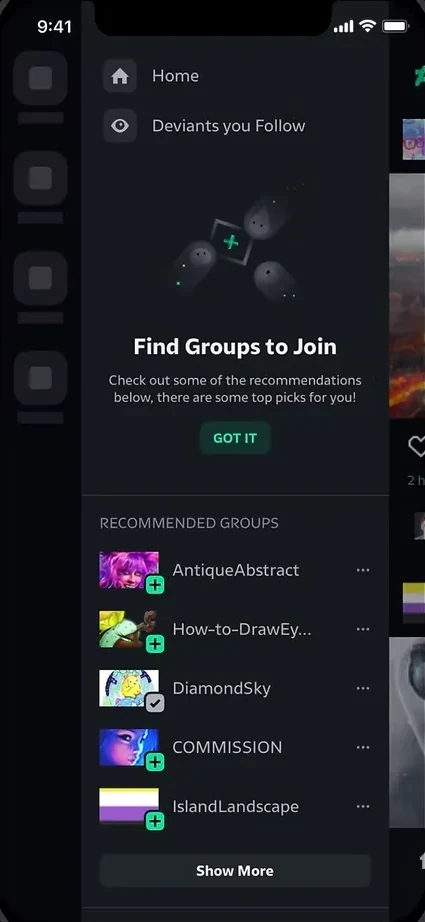
  • Groups: Groups came to the app for the first time, with recommendations to find yours

    Groups

    Groups arrived in the app for the first time, with recommendations. Belonging is a strong reason to come back.

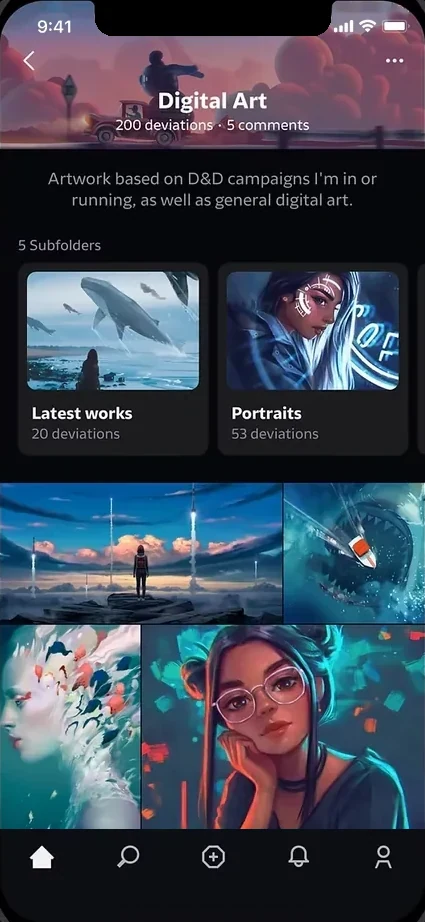
  • Collections: Sub-galleries artists curate and organise themselves

    Collections

    Sub-galleries artists curate themselves: their own corner of DeviantArt and a reason to return and add to it.

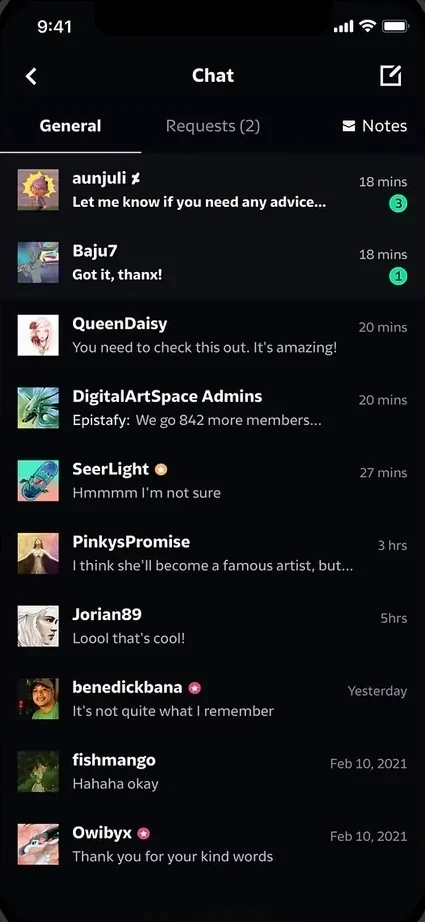
  • Chat: Instant messaging, new to the app and in step with the web

    Chat

    Messaging, new to the app and in step with the web. A place to look at art became a place to meet artists.

  • Conversation: Talk about art in real time, without leaving the app

    Conversation

    Talk about art in real time without leaving the app. Every conversation is another reason to come back.

  • Gallery: Artists put their best work front and centre

    Gallery

    Artists put their best work front and centre: a reason to post here, and for visitors to follow.

Scaling growth

The results put the whole mobile org in my hands.

After the redesign’s success, in May 2021 I stepped up to Head of Mobile and took on all of mobile R&D. I pivoted the product strategy from engagement to growth, optimised how we delivered, and focused the roadmap on monetisation, growth and new-user acquisition, building a proper AI recommendation engine to scale engagement further.

The mobile org, 2021–22

Head of MobileMe

  • DesignIsrael, Ukraine
  • iOSNew Zealand, Israel
  • AndroidCanada, Israel
  • QARomania
  • BIIsrael
  • Product marketingUnited States
  • CommunityUnited States

7 teams 6 countries

  1. Product strategy

    Reshaped product strategy

    ProblemThe strategy served engagement alone, and mobile had no path to monetisation.

    Moved the roadmap from engagement to growth (acquisition, conversion, retention), then pivoted towards monetisation.

    +12%new-user conversion

  2. Product and design

    Products built for growth

    ProblemNew users met a bare mobile-web onboarding, and recommendations needed a proper engine to scale.

    Steered the growth products: onboarding by intent, rebuilt notifications, Badges, and a proper AI recommendation engine.

    +25%first engaged users

  3. Development

    Optimised product delivery

    ProblemiOS shipped half a year behind Android, with too few engineers to catch up.

    Grew the iOS team and re-prioritised its backlog, cut Android’s iteration time, and brought engineers into discovery.

    6 moiOS gap behind Android, minimised

  4. Data and analytics

    Scaled analytics

    ProblemData analysis was slow and gave no clear view of how people used the apps.

    In partnership with the analytics team and dev leads: a client-side events system, automated reporting and app-health monitoring.

    3new data systems

  5. Product marketing

    Marketing inside the product

    ProblemBoth app ratings were low, and web users didn’t know the new apps existed.

    Web-to-app campaigns, rating experiments and app store optimisation, with product marketing and community in the team.

    2.3→4.5Android rating in six months

  6. Team leadership

    Seven teams, one product team

    ProblemA distributed org across six countries, working as separate units.

    Brought design, iOS, Android, QA, BI, product marketing and community together as one team with shared goals.

    1→7teams, six countries

Growth products

Built to acquire, engage and earn

Each product owned one growth lever: onboarding turned newcomers into members, a new AI recommendation engine kept them engaged, and Badges brought monetisation into the app. Together they lifted new-user conversion by 12% and first engaged users by 25%.

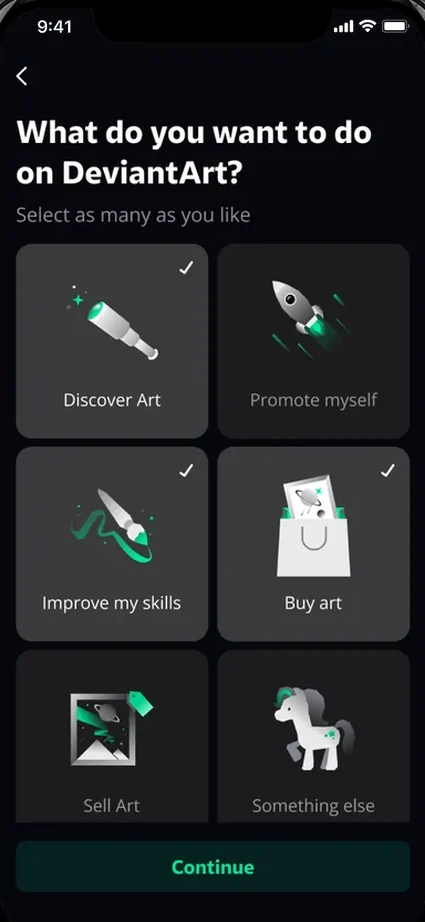
  • Onboarding: people pick what they want to do on DeviantArt

    Onboarding experiments

    Tested onboarding by intent, as the first minutes decide who stays.

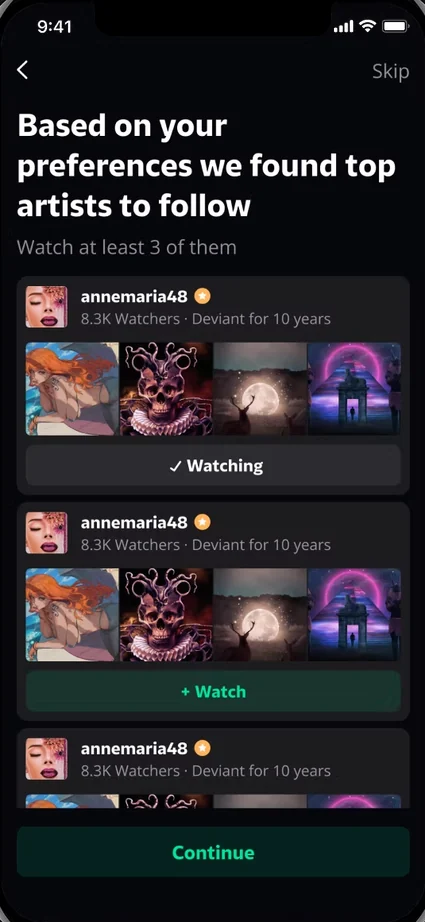
  • Onboarding: recommended artists to watch, based on their picks

    AI recommendations

    A new AI engine matched people to art from day one, driving engagement.

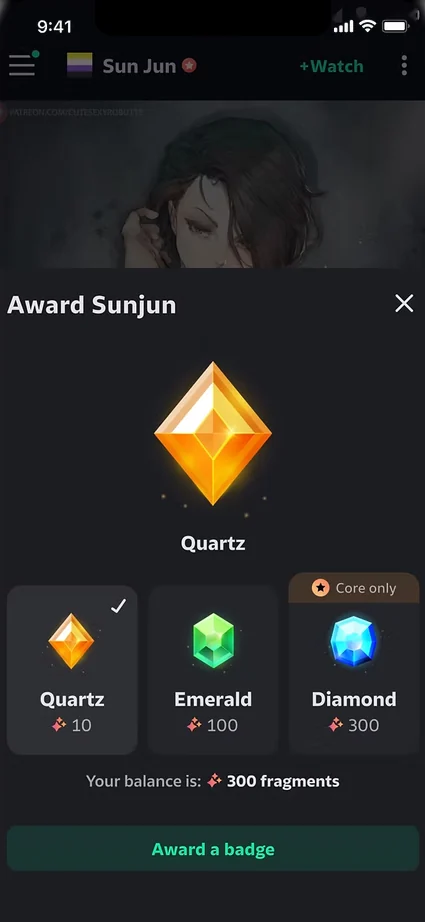
  • Badges: award an artist, the first step towards monetisation

    Badges

    Scaled monetisation in the app: a reason to pay that rewards artists.

Platform impact

The revival didn’t just save the apps. It grew DeviantArt.

Bringing the apps back to life also gave DeviantArt something it didn’t have: a channel that brought in new people and turned them into active members and creators. 64% of new mobile users had never used DeviantArt before. Once there, they engaged and created far more often than on desktop, and the Android rating climbed from about 2.3 to 4.5, above the peers’ median.

Android 28-day average rating in Google Play, 2015 to 2022: steady above 4.2 until 2017, falling to about 2.3 by 2019, then rising from 2020 during the redesign to about 3.6, and to 4.5 during the growth chapter, above the peers’ medianRedesign chapterGrowth chapter
Google Play Console, Android, 28-day average rating.
2.12.83.54.24.920152016201720182019202020212022 2.3 3.6 4.5 RedesignGrowth
Android ratingPeers’ medianRedrawn from Google Play Console, Android, 28-day average.
64%of new mobile users were new to DeviantArtThe apps became a new acquisition channel for the whole platform.
  • 3×New to engagedNewcomers became engaged members 3× as often as on desktop.
  • 2×Daily engaged usersMobile visitors engaged daily twice as often as on desktop.
  • 2×New to submittersNewcomers became submitters twice as often as on desktop.
  • 2.5×Daily submittersMobile visitors submitted art 2.5× as often as on desktop.

Mobile compared with desktop

Reflections

The chapter that changed how I lead and what I believe design can achieve.

This was one of the most challenging and rewarding experiences of my career. It fundamentally changed how I think about design, business, and leadership. I learned what it takes to turn design into a growth engine, build teams that own outcomes, and find direction in uncertainty.

To succeed, I had to grow the product, grow the team, and, most importantly, grow myself. I was fortunate to be surrounded by exceptional people who challenged, supported, and taught me along the way. This journey showed me that the most meaningful chapters of our careers don’t just change what we’re capable of. They change who we become.

Key learnings

  1. Ambiguity is freedom.No playbook meant no limits: we challenged assumptions, experimented and found our own way. The key was knowing when to trust my judgment and when to let evidence decide.
  2. Design is a business growth lever.When design takes ownership of engagement, conversion, and retention, it stops being just a function that delivers experiences. It becomes a strategic force that shapes how the business grows.
  3. Users first, and the business follows.The biggest wins came from solving genuine user problems, not chasing metrics in isolation. Creating more value for our community ultimately created more value for the business.
  4. Persistence is the key.The first sign-off took multiple presentations, many conversations and around six months of pursuing the narrative. The yes came from not letting the case drop.
  5. Nothing great is accomplished alone.What we achieved was a collective effort. It was the talent, trust, ambition, and commitment of incredible people across the organisation that turned an idea into something exceptional.
  6. Match people to the challenge.The right challenge can unlock extraordinary potential. My job was to recognise each person’s strengths, give them meaningful ownership, and empower them to achieve more than they thought possible.

My main takeaway

Design leadership is far beyond design.

The biggest lesson I took away is that design leadership isn’t just about creating exceptional experiences. It’s about creating the conditions for exceptional things to happen: recognising opportunities, making the right strategic bets, seeing potential long before it becomes evident, building teams that challenge and inspire each other, and turning a shared vision into significant business impact. That’s the kind of leadership I’ve pursued ever since.

Next case study

Keep reading.

Wix UX Guild

2018–2022 · 9 min read

Building UX Guild: seven product areas, one design bar

I scaled Wix’s UX Guild almost 3x and built the system that held it together: faster hiring, a clear first month and one standard across seven products.

  • Design leadership
  • Organisational scale
  • Building design org
  • Culture and craft
~3×Team size
−50%Time to hire
7Product areas

UX Group Lead · 17 designersWix UX Guild · UX Group Lead

UX Group Lead · 17 designers